Featured Post

Hey Follow Me!

So I've come up with a way for you all to see at least some pictures when I don't have enough data to upload pictures. I've reo...

Thursday, September 29, 2016

Been a While

Wow, it's been two whole months since I posted, and a busy two months it's been. If you follow me on Instagram (@bethanyinuganda), then you know I've been travelling a lot. It all started when my friend found out her parents had died in a motel fire in the US. I began packing even before we were off the phone, and I arranged with my staff to postpone my duties for the week. I learned a lot about life that week, focusing on logistics, and just being there. (If you feel the desire, the family still has a gofundme going. https://www.gofundme.com/24qkvfuk) Since then, I have had a student lose his dad, and I am very sad to know he has not yet returned to school this term. These were both absolutely heart breaking for me, and coming home to my cat being missing, plus being sick for almost a month, has brought my mood down significantly in recent days.

But there have been such good times, too! I promise to post more details later, but I got to see six of my students grow at Teach to LEAD, take my first solo trip to Rwanda, and of course coming home is always the best thing.

Absence makes the heart grow fonder, and I can truly say that about Fort Portal. Before this term break, I was only just starting to feel at home here. But the homecoming I received from my neighbors, colleagues, students, and friends has been amazing. I didn't realize I really missed Fort Portal until I met a Ugandan-Rwandan who grew up in Kampala and we were able to talk all about Uganda. Now just to get used to waking up at a normal time....

This term I'm going to try to spread out my blog posts! Instead of posting a bunch at a time, I'm going to write a bunch and then post them periodically. I'm also going to continue to endeavor to find guest authors for my blog, but I have faced some challenges in this, so I may instead do interviews. We'll see.

Here's to a great Term Three!

Monday, July 25, 2016

Growing Up


 I woke up this morning in my typical way. Actually, it was a bit worse than normal. The chickens woke me up at 7:00 pm, and I could hardly open my eyes until 7:40 am. By the time I got out of bed, it was 8:10 am. I knew I needed to bathe, but I also knew I didn’t have any pressing reason to be at school until tea at 11:00 am. After my bath, I took the time to wash my feet because I’ve been in Kyenjojo a lot recently, which is much dustier than Fort Poral, and I was ready to head to school by about 10:00 am. When I looked in the mirror as I was brushing my teeth, though, I saw something new: I look like an adult.

This weekend, I directed a one-day camp for the PCTs and some students in Kyenjojo. I signed up for this responsibility, excited to be able to try something new and also because it didn’t sound like it would be tooooooo much work. It turned out to be more work than I thought but still manageable. I thoroughly enjoyed myself, as I know everyone involved did. The PCTs taught the students about HIV/STIs and budgeting and savings, and I brought my youth with me who went to YTT as well as the ones who attended YTT with another PCV. They facilitated sessions on Leadership and Gender along with a couple of PCTs who wanted some extra practice facilitating. Everyone did a wonderful job facilitating, and the students learned so much! I even got to teach some Team Building exercises to lead into the leadership session. It was easier than I expected to release control to all twelve facilitators even though I’ve never seen them facilitate before.


Get to know you in English

Get to know you in Rutooro

Practicing Rutooro

Budgeting and Saving

What business could you open if you saved 10,000 =/ per week?

Human knot!

Hovering...stick?

Do you trust the driver?

GROUP PHOTO!


The whole day ran behind schedule in proper Ugandan fashion, and I seemed to be the only American who was completely unbothered by it. I had not been able to properly reflect on my growth in that aspect before then, but I remember internally freaking out about our mini-camp running behind schedule. I had gotten to the point that it no longer made me angry, but I was still annoyed that we were so far behind schedule. On Saturday, though, I inherently knew that it was more important for learning to happen than for us to remain on schedule. Although this has been an ideology of mine for years, I have had difficulty acting on it until now. I did not interfere except on the prompting of others to move the schedule along. As long as people are learning, the schedule can go jump off a roof.

Maybe I shouldn’t make this post about me. Maybe I should focus on the participants and on the facilitators. But today I am proud of myself in a way I have never been proud of myself before. I am growing in myself and in God while I am here. Never have I loved myself like I do now. Never have I studied the Word like I do now. Never have I felt closer to God or closer to my true life’s purpose. Never have I taken on a huge project like this and not even stressed out about things not coming together until the day before the camp. (We were still working with the caterer on the morning of the event….) Never before have I been able to lead an event without micromanaging, truly just checking in and following up instead of wanting to know every single step. Never before have I been such an … adult.

Sure, there are days when I hole up in my house and refuse to come out because of something petty. There will always be days like that. Along the same vein, there will always be days like today when I wear a wrinkly shirt to work and pretend it’s supposed to be like that. (I cannot stand irons!) Today, though, I feel like I have accomplished the next step towards feeling comfortable in my adult skin. If I can put together this mini-camp (with SO MUCH help from my language trainers), what is next?

Tuesday, July 12, 2016

In Light of Recent Events


In many ways, living abroad is incredibly difficult. You’re separated from your family. You’re thrust into a different culture. Every day is a day full of learning from your mistakes and from those of others. In many places, you face discrimination for your nationality, your race, your religion…. Most days are exhausting, but it’s the thrilling, enthralling days that keep you going. The challenges change your life.

Since moving to Uganda, something strange has happened to me. I actually care about the news. At home, I would read headlines on Facebook and listen to the news if it so happened to be on, but here I have this deep desire to know what’s going on in the world. I hate weekends because I don’t get my daily BBC headlines. (Okay, who could actually hate weekends?) I spend at least an hour every day reading the news, local, US, and international. I feel much more informed, at least on a US national and international level, than I did when I was at home. Perhaps it’s because I could be completely disconnected from the rest of the world if I avoided it. Perhaps it’s because I’ve matured in the last year.  Regardless of the reason, I need the news.

I remember when I moved to Kirksville for university. I was 20, a transfer student after completing my AA in Psychology, seeking a BA in Psychology. While I was at Truman, I hardly had time to read the headlines, let alone actually take the time to understand something that didn’t directly affect me. (Never mind all the time I spent on Facebook, Wikipedia, Mario Kart….) This became eerily apparent when the riots broke out in Ferguson, MO in 2014. Ferguson is only about 40 minutes from my hometown, so in theory I should have been very, very interested in what was happening. However, these things just so happened to occur during some crazy week I was having, one of the majority of my weeks during this time.I told myself I would figure it out later. I saw the headlines on Facebook, and I knew things were not going to calm down any time soon. My friends were all in similar places, a majority of whom were from the St. Louis area as well. We would talk about how this crazy thing was happening, but we didn’t really know about it or what we could or should do. There was a vigil on campus for Michael Brown, and I simply did not care enough to put aside my homework to attend. In addition, the Black Lives Matter movement was very new to me, and I had not yet formed an opinion on it. In short, it did not affect me directly, and so I chose apathy.

Going home for break was almost alienating. My parents and friends, who were able and apt to watch the St. Louis news, knew everything that was going on. They knew far more than I would have figured out even if I had taken the time to look it up. All people talked about was Ferguson. It was all over every news station, and my family and friends demanded we keep up with what was happening. With opinions flying everywhere, I felt incredibly uneducated, out of the loop. It was like I couldn’t hold conversations with people because all they wanted to talk about was Ferguson.  How much news had I missed?


To say I have changed since my time at Truman would be a gross understatement. I may have only graduated a year ago (A WHOLE YEAR?!), but my life is so different now. When everything happened in Ferguson, I had only just begun to think about joining the Peace Corps. Living abroad has always been a dream for me, but I didn’t know that I was going to pursue it so quickly. Now I crave the news. I need to know what’s going on in the world. I am also inspired by more “causes” than I was then. I learned a lot about myself and about the world while I was at Truman.

Violence always has and always will be a part of the human existence. I truly believe that unless we give up our humanity, violence will always exist somewhere in the world. However, the violence in the US as of late has physically sickened me. As much as I need to know what is going on in the world, I can’t bear to read about my country being torn apart. The last month has been especially hard. How do you process the deadliest mass shooting in American history? Or what about the deadliest day for any American police force since 9/11? As much pain as I had been in reading about more police brutality against young black men, this headline shook me to the core. I have never understood the “life for a life” mentality, let alone “lives for a life.” I was raised to forgive people, no matter how difficult or how long it took.  I was also raised to respect a person based on their character, not their color (not to say anything about institutional racism).

Although the gun violence has been the most difficult thing to read about recently (There’s a Wikipedia page dedicated to American gun violence alone.), it is not, by far, the only thing to make me feel physically sick. The stark racism that still exists today, the talks of deporting entire religions, the light sentences for star athletes…. The list goes on and on. America is broken. They’re not the only one in this world, but that’s hardly comforting. The idea of coming home to a broken country, even more broken than when I left it, is maddening. I don’t know how to fix America. I really don’t. This is not a persuasive post about politics. This is a personal post about how hard it is to be abroad during these times.

At home, there is constant discussion of what is going on around America and around the world. I’m sure you read at least a headline or two about the Ugandan election, and Uganda is rarely in the international news. Here, I have to search for anything other than the single top headline in the UK and the single top headline in the US, which get preempted for African headlines, rightfully so. The only exception is my near-daily conversations with my colleagues about. I could choose to be apathetic. It would be the easier choice, trust me. I could choose to vent my feelings on Facebook and feel like I’m doing something when really I’m just ranting to a bunch of people who aren’t going to change anything. Plenty of expats choose this option. Instead, I am going to keep reading, and when my service finishes, I’m going to come back. As much as it hurts to read about these things, it’s the only thing I’ve got. I refuse to become apathetic just because there’s an ocean and eight time zones between home and here, and I can’t stay on this side of the Atlantic when my countrymen are hurting, mentally or physically. I can no longer choose apathy because I am busy, and neither should you. The only way we’re going to change America, to heal America, is to get out there and do something for it.


 “Returning violence for violence multiplies violence, adding a deeper darkness to a night already devoid of stars. Darkness cannot drive out darkness; only love can do that. Hate cannot drive out hate; only love can do that.” – Martin Luther King Jr.
“You shouldn’t have to choose between the police and the citizens they are born to protect.” – Trevor Noah
“Human suffering anywhere concerns men and women everywhere.” – Elie Wiesel, Night

Saturday, June 11, 2016

New Blog Authors!!

I recently watched this AMAZING TED Talk by a Nigerian woman named Chimamanda Ngozi Adichie. It talked of how a single story is harmful. Specifically, she gave many examples from her own life of how the Western world’s single story of “the country of Africa” is harmful to the entire continent. Please, please, take the 20 minutes to watch this discussion. It may very well change your view on the world.


One of my favorite quotes from this video is this: “The problem with stereotypes is not that they are untrue, but that they are incomplete.” Our stereotypes of “poor Africa” are incomplete. It is exactly 1/3 of my job to bring Uganda back home to America, to show the wonderful people of my beautiful country the amazing truth of Uganda, the truth behind the lives of the people here. Unfortunately, I am not necessarily the best person to do that. As much as my worldview has changed in the last seven months, being abroad will never, no matter how long I am away, completely strip away my America-colored glasses.

Thanks to a wonderful presentation by our Diversity Committee at IST, I have adopted an idea. I want to host guest authors on my blog. I am going to give the students and staff of my college the opportunity to tell you all what Uganda is like, from their own perspective. Before I do this, though, I want some information from you. What questions do you have about Uganda, about Africa? (Also, for my international readers, please don’t think this is limited to those in America.) Do you want to know what their daily lives are like? What about their cultures interests you? The possibilities are endless. Even if you have political questions, you’re welcome to ask them. I am unlikely to post them publicly, but I will gladly email the answers to you.


So post below or email me at bethanyinuganda@gmail.com if you would like to submit questions, and soon I will open up my blog to my students and colleagues! 

Monday, June 6, 2016

Love Redefined

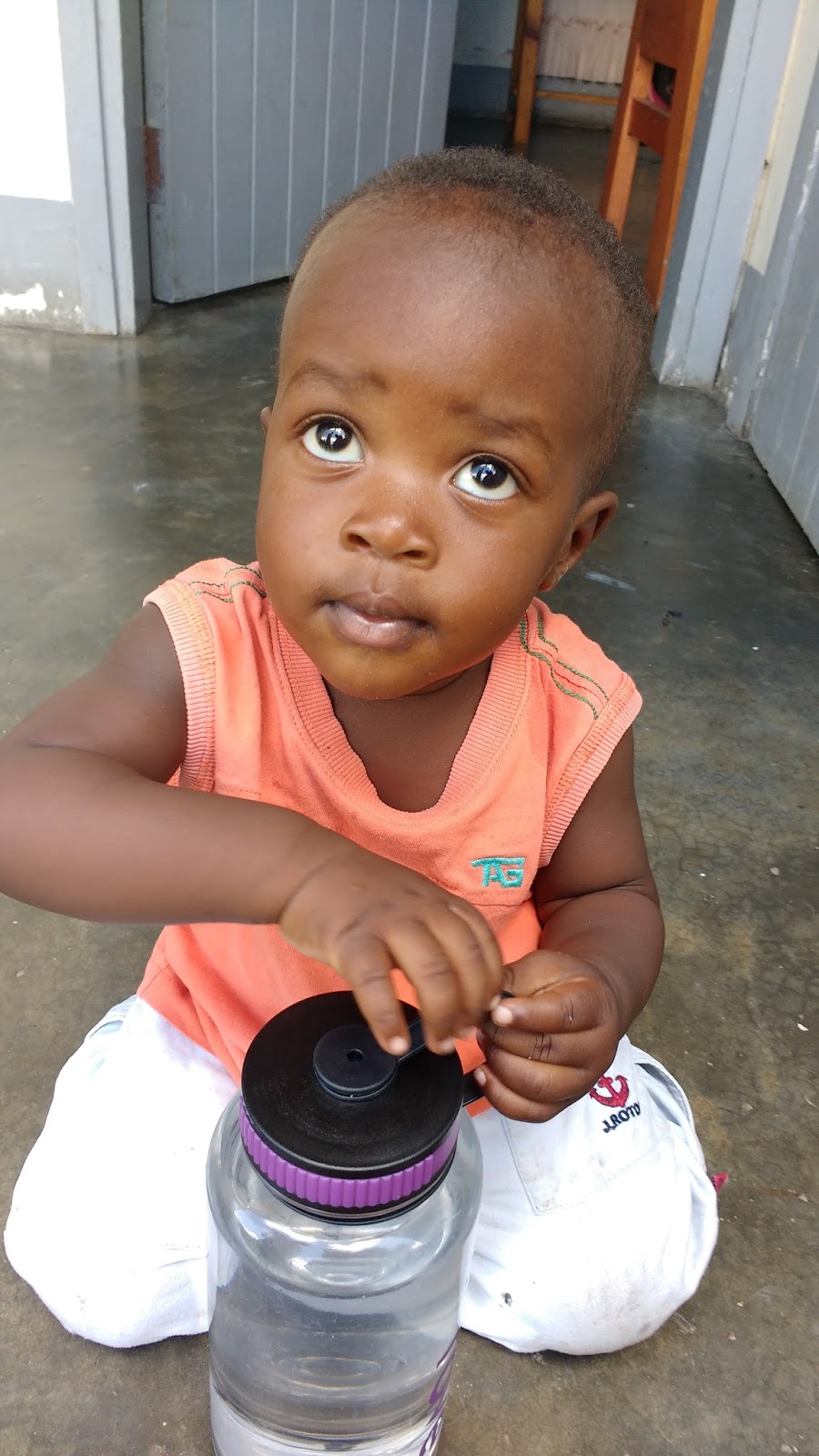
So I have something to admit to you. I have fallen in love. His name is Austin, and he’s just over a year old. His parents are absolutely my best Ugandan friends, and he is mine. My baby. My Austin.

Things weren’t always so peachy with Austin, though. At first, he was very afraid of me. Having just turned 1, I wasn’t surprised. Babies at this age are very, very attached to their primary care givers, for Austin, his mom. He hardly wanted to leave her lap. He wouldn’t let me touch him, let alone hold him, and he was very obviously cautious of me. “He is afraid of your hair,” I was told. For some reason, Ugandans seem to think babies are afraid of European hair. Not our skin color, our hair.


Imagine you are a baby. Your whole live, that one whole year of life, you have only seen people who are dark-skinned. Sure, there is a bit of variation in the tone, but they are all dark. Logically, people are supposed to be dark. Then, one day, this light-skinned thing comes around. They can’t be a person because people are dark. But the thing talks and walks and moves like a person. Maybe something is wrong with them. They’re not dark. Now the light-skinned thing is trying hold you, trying to comfort you like mom does. It’s just not right. You begin to cry, afraid for your life…. Or at least that’s how I imagine a baby’s mind works.

So as you can imagine, I was expecting for Austin to be wary of me. It didn’t hurt my feelings when he didn’t want to be held; I understood. Over the first two months I was living in Fort Portal, we got to know each other. He and his mom would come over, and we would play cards or talk. He went with us to the market each week. Although he wasn’t talking yet, he actually seemed to understand when I spoke to him. (His parents are from completely different parts of the country, so they’re raising him with English.) Through time, he became comfortable enough to sit in my lap and play with me, but always with mom right there. By the time Easter rolled around, I was very sad to say goodbye to my man. I didn’t even know if he would remember me after a four-day weekend, considering we had seen each other almost every day for the last two months.

He fell asleep with that capati in his mouth
a few minutes later, the cutie.


When I came home from Easter, wearied from the long trip to Masindi, I spent the night alone, making my absence a whole five days. When I went to greet him and his family, his face absolutely lit up, and mine too. Not only did he recognize me, but he refused to sit with his mom, demanding to be held by me. It was easily one of the best days of the year so far. Shortly after this reunion, Austin and his mom went for a trip to Lira in northern Uganda. In theory, this would only be a few weeks, but nearly two months later, they’re about to return. I’m very, very excited about the return of my baby, to see how he has grown and matured. His dad tells me he’s walking on his own now and almost talking. I can’t wait to get a hug and see how it’s been!

Colors are not "gendered" in Uganda!
Pink is for everyone!

Mpora, Mpora

There have been several times in the last couple of months where I have purposely called home when my family is at some kind of gathering. I love to have the phone passed around so I can chat with people I haven’t seen in, oh, *looks at watch*, seven or more months now. Inevitably, at least one person asks me “What do you miss?” Usually, they are asking this to find out what they can send me in a care package (If you want to send me one, I won’t be sad. My supplies are running low.), but to be honest, I really don’t miss the food of America.

While living in Uganda, I have lost around 25 pounds and really begun to hate fried food. Okay, that’s a bit of a lie. I still love fried food. Just not GREASE LAIDEN food. I eat many more vegetables than before, and I eat very little processed food. Many volunteers in Uganda complain about the blandness of the food here, but I really quite like it. For me, spicy food is just too much. I love not having to complain because the food is, literally, hurting my mouth to eat. Really the only thing about food at home I miss is being able to bake meals, cheese, and the variety, none of which neatly fits in a care package.

So what do I miss? Nothing that you can really send me. I miss my family to begin with. Their unconditional love, their wit and humor, their pure acceptance of me. I miss having a church family, understanding church services, and agreeing with what they are preaching. I miss having a park go to and sit on a picnic table and chill. I miss being able to walk down the street and eat my rolex, ice cream, etc., something that is very rude and uncultured here. I miss being able to have deep, meaningful conversations late into the night. I miss driving; I think this is seriously what I miss the most. I miss being able to make my own schedule for the days instead of running on someone else’s, although that’s working life, isn’t it? I miss snow and wearing sweaters and coats. I miss my kitty….

This is turning into a sad, sappy post, and it’s not meant to be. It’s really just meant to be a look into my life. After thinking of all of these things, though, I can’t help but think about what I will miss about Uganda when I leave. I will miss the soft breeze of the forever-summer. I will miss the soft patter of rain on my roof. As crazy as it sounds, I will miss the screeches of the bats that live in my ceiling, the scurry of the lizard that lives in my spare room. I will miss the silence as everyone eats their posho, matooke, and beans, the silent bond that eating the same food every day in the same room forms. I will miss the children that run up for a hug just because I look friendly. I will miss the beauty of the Rwenzori in my backyard, the air that has been cleaned by the banana trees. I will miss watching Ugandans run as the rain trails behind them. I will miss seeing all of my little nursery school kids grow up into adults.


There is a common phrase in Uganda, translated among the languages: “Mpora, mpora” in Runyoro-Rutooro. It simply means “Slowly, slowly.” Usually, it is used to describe how things work here. This culture is one of much fewer strict deadlines than in America. But right now, I just want to talk about how, mpora mpora, I am falling in love with this place, with its people, its culture, its beauty. As much as I miss home, it is no longer my only home, not even my only home country. I am so privileged to live here. This amazing country is etching a place on my heart, right alongside Truman, home, and down home. Even though it doesn’t quite feel like “home” even yet, mpora mpora.

Reactions

So now that I'm safely on the other side of the Atlantic, I'd love to share some of the reactions I heard from people when they found out I would be moving to, well, Africa. Some of these are indicative of how little people know about the continent of Africa in the US, but many of them are just plain funny. Enjoy!


"You're doing what?"

"Is Uganda near Africa?"

"That's the coolest thing ever."

"How can I become a volunteer?" (I still get this frequently. Check out peacecorps.gov!)

"Oh you have to have a degree to do that?"

"Why would you do that?" (The answer to which is so much more complicated than it should be.)

"Can you ever come back?" (Why, yes, they fly me home after two years. And if I want to visit home earlier, I have vacation days.)

"Are you going to marry some Africa guy?" (And have cute African babies?!)

"They speak English?!"
"Yeah, well they were a British colony until recently."
"But still...."

"Uganda has been independent for more than 50 years!"
"Only?"

"Luganda is the language spoken in...Uganda...?" (One of more than 50!)

"You can't go." (Break my heart....)

"Can I fit in your suitcase?"

"WE CAN VISIT YOU?! THAT'S AN OPTION?!" (YES PLEASE VISIT ME.)

"This will absolutely change your life." (That's what I'm hoping for.)

"I'm so excited for you"

"Can I still call you?" (Why, yes, because internet.)

"You'll have a cell phone?!" (Yes, Uganda skipped landlines and went straight to cell phones.)

And my absolute favorite, from my grandma: "Are you still going to go if you don't have internet?" (Well isn't that ironic now?)

Media Archive

Look at this cool media library of pictures from PC/UG over the years!

http://medialibrary.peacecorps.gov/p658227351

Ugandan Architecture

These pictures are actually from PST, and I just never got around to uploading them. They show fairly typical Ugandan architecture. Believe it or not, mud huts are not common for people to live in. Instead, people live in concrete or brick houses for safety. When people do live in mud houses, they are framed with sticks. (Unfortunately, I don't have a picture for this yet.) As I get more pictures, I will upload them!


Banyeta Akiiki

“Banyeta Akiiki!” It is such a common phrase for me. Especially with small children who don’t yet understand the rudeness of “Omujungu!”, I take the time to explain, “Banyeta Akiiki. Tibanyeta omujungu. Banyeta oha?” “They call me Akiiki. They don’t call me white (foreigner). Who do they call me?”

Fort Portal is part of the Batooro kingdom. The Banyoro and Batooro are related kingdoms, hence the, linguistically speaking one, language Runyoro-Rutooro. Here in beautiful Midwestern Uganda (I moved from the Midwest of the US to the Midwest of UG, like a cool kid.), your empaako may be more important than your name. It is a sign of respect. There are many people I know at the market only by their empaako. Children call their parents by their empaako instead of by “Maama” or “Taata.” It is 100% polite to respond to “Oraire ota?” or “Osiibire ota?”, “How have you spent the night?” or “How have you spent the day?” with “Empaako?” It’s simply rude to answer someone, and then greet them back, without knowing their empaako.

What is an empaako? I’m glad you asked. First of all, the word “empaako” is both singular and plural, determined by context. Empaako are a very, very important part of Banyoro-Batooro culture, and they are not found in other parts of Uganda, although similar practices, such as clan names, are. Simply translated, empaako are “pet names.” Each one has a meaning behind it, though the meanings can be many, or they can be disputed by the Banyoro-Batooro. My empaako, Akiiki, is a very common empaako, and it means “all welcoming.” Other common empaako include Abwooli, “beautiful, cat,” Ateenyi, “snake spirit,” or Apuuli, “lightning/thunder spirit.” Some empaako are restricted to men, like Apuuli, although men can have any empaako except that of the king, Okaali.

As discussed above, greeting someone “Empaako?” is a very common practice. If you forget to ask someone’s empaako, like a certain American living currently living in Uganda frequently does, your greetings are often repeated. I cannot tell you the number of times I have had the conversation demonstrated below.
“Oliyota?”
“Kurungi. Oliyoto?”
“Kurungi. Empaako yawe?”
“Empaako yange Akiiki. Kandi iwe?”
“Amooti. Oliyota Akiiki?”
“Kurungi Amooti. Oliyota Amooti?”
“Kurungi Akiiki.”

“How are you? (Informal greeting)
“Good. How are you?”
“Good. Your empaako?”
“Mine is Akiiki. And you?”
“Amooti. How are you Akiiki?”
“Good Amooti. How are you Amooti?”
“Good Akiiki.”

For expats living in the Banyoro-Batooro kingdoms, it is a sign we have been here for a while. It is also a sign that we have been accepted by at least one munyoro or mutooro. Like name signs in American Sign Language, only a munyoro or mutooro can give you an empaako. I cannot give another expat an empaako. There are other customs surrounding empaako being given to a munyoro or mutooro, which I encourage you to research. Regardless of whether you are born a munyoro, mutooro, or other nationality, you are supposed to have a party thrown for you by the one who gives you your empaako. For me, it never happened, because I was given my empaako by shop owner in Kyenjojo. His empaako is Adyeri.

For me, my empaako is my identity in Uganda. Even though it has never been made “official,” and some Ugandans tell me I have to have my party before they will call me Akiiki, my name does not matter so much around here. When I go to the market, I introduce myself as Akiiki. I learn the empaako of those who I buy from frequently. Amooti is my favorite. She speaks Rutooro slow enough that I can understand her most of the time. When people call me “omujungu,” it is my first defense. People are much more open to calling me “Akiiki” than hearing they are wrong for calling me what I honestly am. It even works for harassment. When I get called lewd names, I simply tell them, “Banyeta Akiiki. Empaako yawe?” It opens the door for me to begin a relationship, or at least an acquaintanceship, with these people. Yes, they will scream “Akiiki!” at me every time I pass, but at least they are respecting me. (Remember that using someone’s empaako is a sign of respect.) The only problem for me is remembering everyone’s empaako. For example, I have explained to the children in my compound that I do not want to be called “omujungu.” Now the children in my compound have begun to greet me “Ta Akiiki!”, “How are you, Akiiki?!”, and the only response I have is “Muli muta?”, “How are you (all)”? because I have yet to learn each one’s empaako.


For more information about empaako, other naming practices, or the Banyoro and Batooro kingdoms, please visit their websites!